


How to attach a tarpaulin to a pergola?
By Bâches Direct
Published on 29-12-2021
Last updated 29-07-2026
5


Have you found the perfect fabric for your pergola? The installation stage is now crucial to guarantee the aesthetic appeal and longevity of your investment. A well-installed and maintained pergola cover can last up to 15 years, depending on the Tecplast model. Discover our expert tips for securing a pergola tarpaulin or cover for a successful installation, season after season.
Before considering installing a canopy on your pergola, it's important to choose the right cover to ensure optimal protection.
Depending on your preferences, you can create an open and bright pergola-style veranda or a shaded and airy patio. Visit our pergola cover guide to protect and enhance your pergola.
How to successfully install your pergola cover?
- Taking accurate measurements for your pergola: Measure the internal dimensions of the structure and subtract 8 cm from the width and 8 cm from the length to ensure the correct size for your pergola canopy and to allow sufficient space for the bungee cord to stretch. Without this space, you won't be able to tension the canopy properly; it will flap in the wind and wear out prematurely. To prevent water pooling and tears, your PVC pergola canopy must be perfectly taut.
- The slope: the vital element to avoid the "bowl" effect on your pergola: The most common mistake when installing a waterproof canopy is laying it completely flat. For a waterproof PVC canopy, a minimum slope of 10% is essential. Without an incline, rainwater will pool in the center of the canopy, creating "water pockets." If your structure is flat, consider raising one side or adding a taller central support to create natural drainage. The water must be able to flow outwards without any obstruction.
- Essential equipment for securing your pergola cover or awning: You will need professional-grade elastic cords, sized to fit the diameter of your grommets, and fixing hooks if your pergola structure doesn't already have them.
- Regular maintenance: Cleaning twice a year with warm water and mild soap is sufficient to preserve the UV protection and the vibrancy of the colors of your PVC.
Successfully installing your awning requires careful planning: the key is achieving the perfect balance between precise tension and using the right accessories to ensure its longevity. A sloppy installation is the primary cause of premature wear (water pockets, wind tears). Conversely, a awning perfectly draped over its frame instantly enhances your patio.
Before you begin, make sure you have a clean frame and your Tecplast fasteners within easy reach. Here's a step-by-step method, proven by our technicians, for a professional and lasting result.
Step 1: Prepare for installation and choose the right fixings
Before climbing your ladder or stepladder, it's essential to understand why choosing the right accessories is just as important as choosing the tarp itself.
Why use bungee cords instead of rigid cable ties? Wind is a pergola's biggest enemy. If you secure your tarp with rigid fasteners (like plastic cable ties), even the slightest gust will put a sudden strain on the grommets, potentially tearing them out. Elastic bungee cords, on the other hand, act like shock absorbers: they absorb the wind's energy and spring back into place, protecting both the structure and the tarp.
-
GOOD DEAL
Fixing
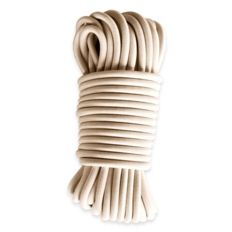
Ivory Bungee cord 20 meters - PRO Quality TECPLAST 9SW - Elastic cord for tarpaulin with diameter 9 mm
(589)€35.99
-10% off with code SUN
-

GOOD DEAL
Fixing
Set of 30 Round Tarpaulin Hooks - Black Colour - TECPLAST CC30 - Fixing hook for tarp - Pergola, Pool, Trailer
(14)€24.98
-10% off with code SUN
-

GOOD DEAL
Fixing
Black Bungee cord 20 meters - PRO Quality TECPLAST 9SW - Elastic cord for tarpaulin with diameter 9 mm
(440)€35.99
-10% off with code SUN
-

GOOD DEAL
Fixing
Set of 40 Round Tarpaulin Hooks - Black Colour - TECPLAST CC40 - Fixing hook for tarp - Pergola, Pool, Trailer
(15)€28.99
-10% off with code SUN
-

GOOD DEAL
Fixing
Lot of 10 Ball tansioners for tarpaulins
(55)€19.99
-10% off with code SUN
-

GOOD DEAL
Fixing
Grey Bungee cord 20 meters - PRO Quality TECPLAST 9SW - Elastic cord for tarpaulin with diameter 9 mm
(436)€35.99
-10% off with code SUN
Step 2: Respect the slope for optimal drainage
Once the materials are ready, the slope is the second key to a long-lasting installation.
The importance of a slope (10-15%): For a waterproof PVC tarpaulin, a minimum slope of 10% to 15% is essential. If your pergola is completely flat, rainwater won't be able to drain away.
Why is this vital? Without this slope, you risk the formation of water pockets (the "basin" effect). The stagnant weight of the water can reach several tens of kilograms, which irreversibly deforms the PVC and exerts enormous pressure on your attachment points and the pergola's structure itself. A well-defined slope allows the water to flow immediately towards the gutters, ensuring a taut and clean tarpaulin.
If your structure is flat, our team recommends adding a raised central crossbar or shims on one side to artificially create this slope.
Step 3: Installing the pergola canopy on your structure
- Centering your pergola cover: Place the tarpaulin on the pergola roof. Center it, leaving a consistent gap (approximately 4 cm on each side) between the edge of the canopy and the frame's uprights.
- Securing the corners: Begin by securing the four corners with bungee cords, but don't tighten them fully. This will stabilize the canopy.
- Perimeter lacing: Install bungee cords around the entire perimeter. The most effective method is staggered lacing or using an individual bungee cord per eyelet for even tension.
- Final adjustment of the pergola cover: Once all the bungee cords are in place, adjust the tension. The canopy should be smooth and wrinkle-free to allow rainwater to drain naturally.
Step 4: Maintaining your pergola cover to make it last 15 years
A PVC tarpaulin is naturally durable, but minimal maintenance significantly extends its lifespan.
- Cleaning: Use a soft sponge and soapy water. Avoid using pressure washers too close to the tarpaulin, as they can damage the protective PVC coating.
- Winter storage: If you choose to remove your pergola tarpaulin in winter, which we recommend to preserve the fabric over time, ensure it is completely dry before folding or rolling it up. Store it in a dry place, protected from rodents.
- Routine check: Once a year, check the condition of your bungee cords. If they show signs of cracking due to UV exposure, replace them: it's a small investment that protects your pergola tarpaulin.
To ensure the longevity of your pergola tarpaulin installation, it is essential to distinguish between preventative maintenance and the key installation steps. Because a poorly stretched tarpaulin or a neglected PVC prematurely loses its technical properties, we have summarized the essential best practices for you.
|
Action |
Frequency |
Recommended equipment |
Profit |
|---|---|---|---|
|
Tension check |
Regularly, and particularly during difficult weather conditions |
Elastic bungee cords, round tarpaulin hooks |
Avoid water pockets |
|
Complete cleaning |
Twice a year (Spring/Autumn) |
Water + Mild Soap |
Preserves radiance and UV protection |
FAQ - Securing and installing a tarpaulin on your pergola
Installing a pergola cover often raises practical questions: Can you install it alone? How do you deal with a stubborn crease? Our team has compiled the most frequently asked questions from our customers during installation. Whether you're a beginner or an experienced DIYer, you'll find solutions to the most common technical challenges here to ensure a stress-free installation.
How do you take the correct measurements for my pergola?
To prevent sagging due to bad weather and the formation of water pockets, it's important to take the correct measurements of your pergola so that your cover is as taut as possible and easy to install.
To do this, you need to measure the internal dimensions of the structure and subtract 8 cm from the width and 8 cm from the length. Around the perimeter, the 4 cm gap between the structure and the cover ensures good tension with some flexibility.
Can you install a pergola cover alone?
For smaller sizes, yes, although it's always easier with several people. For tarpaulins larger than 15 m², we recommend two people handling the canvas to ensure balanced tension without excessive effort.
How to install a pergola tarpaulin with a bungee cord?
First, you need to determine the length of bungee cord required to secure your awning.
Don't worry, to calculate the necessary length, simply measure the circumference of your awning and add between 20% and 30% depending on the thickness of your structure.
Installing your pergola awning with a bungee cord is very simple. The awning has metal grommets every 250 mm around its entire perimeter. Thread the bungee cord through these grommets, wrap it around the structure, and then secure it.
How to secure a pergola cover with hooks?
You can use them in two different ways. You can wedge the ball into the grommet of the awning or use the cord; you attach your awning to a hook, rope, or other anchor point.
How to attach a pergola cover with a reinforcement kit?
Simply position the mortise where you want to create a connection with your pergola. Once you've chosen the spot, use neoprene glue to apply a double layer of adhesive, being careful not to use too much to avoid overspray.
My pergola cover is wrinkled, is that normal?
If wrinkles appear, it means the tension isn't even. Redo the lacing of the bungee cords, starting from the center and working outwards. On a new cover, some storage wrinkles will naturally disappear after a few weeks of exposure and tension.
How do I remove stubborn stains from PVC?
For sap stains or urban pollution, use a special PVC cleaner or diluted white vinegar. Rinse thoroughly with clean water after application.
Successfully installing and maintaining your pergola canopy is the secret to transforming a simple purchase into a profitable investment for over a decade. By following these key steps—from choosing the right bungee cords to installation and regular inspection—you guarantee your pergola reliable protection and impeccable aesthetics, whatever the weather.
Remember: a durable canopy always starts with precise dimensions and a material suited to your environment. If you haven't yet finalized your project or are still unsure which type of pergola canopy to choose for your structure, feel free to consult our guide to choosing your pergola cover.
Technical Glossary - Securing your pergola cover
- PVC (Polyvinyl Chloride): A heavy-duty, ultra-resistant material used for long-term tarpaulins (projects lasting several months or years).
- Weight (g/m²): Unit of measurement for the fabric's density. For a pergola, a weight of 680g is the professional standard for a lifespan of over 10 years.
- UV Treatment: A chemical process integrated during the PVC manufacturing process to prevent yellowing, discoloration, and loss of flexibility due to sun exposure.
- Elastic Cord: A multi-strand elastic cord essential for securing the tarpaulin. It absorbs wind gusts and protects the grommets from tearing.
- Grommets: Metal or plastic rings crimped into the tarpaulin's hem, allowing fasteners to pass through without tearing the material.
- Reinforced Hem: A perimeter finish consisting of doubling the tarpaulin's thickness at the edges to ensure secure anchoring of the grommets.
Written by the Bâches-Direct technical team, experts in protective tarpaulins since 2006.
-
5
 Buying guide Pergola PVC
Which cover for a pergola?
Do you want to transform your terrace into a permanent living space? Whether you are looking to cover or dress up a pergola to create a refreshing shaded area or robust protection against the elements, the choice of pergola fabric, or pergola cover , is the central element of your project.
-
3
 News Garden Pergola
Shade net for pergolas and terraces: the bohemian decorative asset
Want to transform your outdoor space into a peaceful haven without suffocating it? Shade netting is the must-have product for spring-summer 2026: bohemian-style sun protection for a cosy outdoor space that still lets your space breathe.
-
3
 Garden
Flawless garden in all seasons: the ultimate guide to maintain and protect everything
Having a beautiful garden, a welcoming terrace and a perfectly trimmed hedge is the goal of most of us. But maintaining your outdoor spaces cannot be improvised. It is a permanent cycle: in spring and summer, we clean, we size, we mow; in autumn and winter, we protect and secure.
-
4
 Tips Roof
Installation Guide — How to tarp a roof effectively?
To cover a roof, a quality roofing tarp is only truly effective if it is properly installed. A neglected installation can lead to water pockets, devastating wind blows or persistent infiltrations. Whether you are in the renovation phase or in an emergency situation, discover our expert recommendations for a secure and sustainable water disposal.
-
3
 Pergola
Pergola fabric: lifespan, durability and maintenance
When installing a pergola canvas, it is natural to wonder about its lifespan. Exposed to sun, wind and rain, the canvas must be strong enough to maintain its performance over the years.